JUNE 5
2 0 2 6

The day we take a break from fighting each other online,
and work together to repeal the Jones Act
to remind each other of our shared humanity and common goals.

free the ships ↓
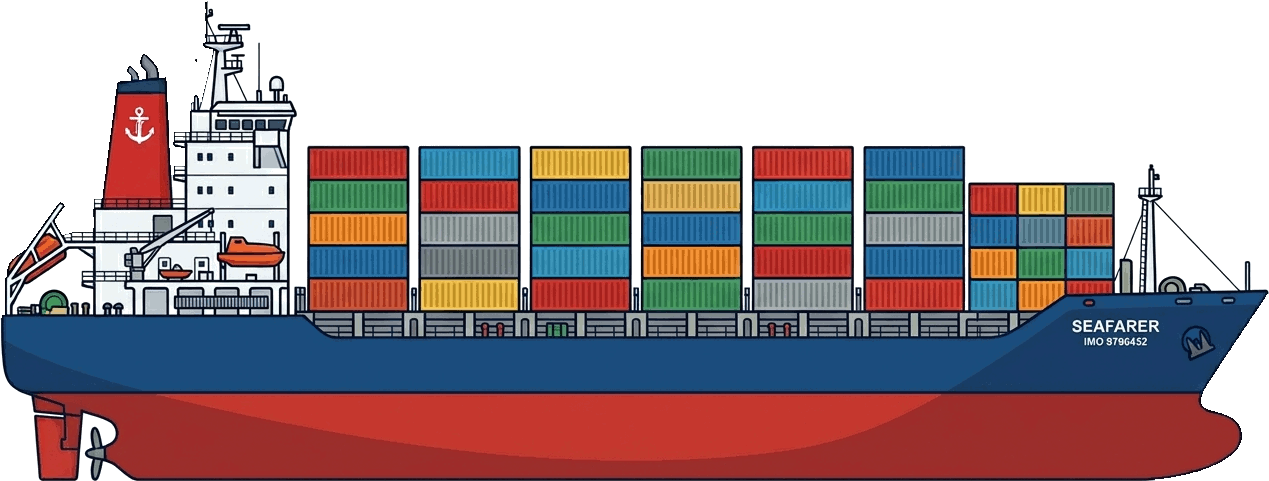
Container ship sailing by

We finally found something
everyone agrees on.

Left, right, center, libertarian, socialist, your uncle who "doesn't do politics" — virtually every economist and policy expert agrees the Jones Act is bad. It's possibly the only issue in America with near-unanimous expert consensus and near-zero public awareness. So let's fix that. Together. On June 5.

Step 1: Stop Fighting

On June 5, we declare a 24-hour ceasefire on social media. No dunking. No ratio-ing. No "well actually"-ing. Just vibes and maritime law reform.

Step 2: Learn About Ships

The Jones Act says goods moving between US ports must travel on US-built ships. Sounds reasonable — except almost no ships are built in the US anymore. So instead of sailing directly from Houston to Puerto Rico, cargo often routes through a foreign port like Jamaica first, on a foreign ship, just to technically comply. Americans shipping to Americans, via another country, because of a law meant to protect American shipping. You can't make this stuff up.

Step 3: Actually Do Something

Write your reps. Have a cookout. Buy a $200 boat off AliExpress and ceremonially transport a single coconut between two US ports. You know, normal civic engagement.

The Jones Act: A 100-Year-Old Law That Somehow Still Exists

The Merchant Marine Act of 1920, Section 27 — better known as the Jones Act — requires that all goods shipped between US ports be carried on ships that are US-built, US-owned, US-crewed, and US-flagged. It sounds patriotic until you realize what it actually does.

It Makes Everything More Expensive

Shipping costs between US ports are 3 to 5 times higher than comparable international routes. This hits island territories hardest — Puerto Rico, Hawaii, Alaska, and Guam pay vastly inflated prices for basic goods. A Grassroot Institute of Hawaii study found the Act costs Hawaiian households roughly $1,800 per year.

It Hurts Disaster Relief

After Hurricane Maria devastated Puerto Rico in 2017, Jones Act restrictions initially prevented foreign ships from delivering aid, even as people were dying. The government eventually issued a temporary waiver — after public outcry. This happens every. single. time.

It Doesn't Even Help American Shipbuilding

The US had around 300 oceangoing merchant ships when the Jones Act passed. Today? Fewer than 100 Jones Act-eligible vessels. Meanwhile, South Korea builds more ships in a month than the US builds in a year. The "protection" has protected the industry into near-extinction.

It Hurts the Environment

Because coastal shipping is so expensive, goods that could go by water get put on trucks and trains instead — producing more carbon emissions. The Jones Act is literally making climate change worse because of a law from the Woodrow Wilson administration.

It Raises Energy Costs

New England imports liquefied natural gas from Trinidad and Tobago instead of getting it from the Gulf of Mexico — because there aren't enough Jones Act-compliant LNG tankers. Americans import energy from other countries because it's illegal to ship it to themselves affordably.

So If Everyone Hates It, Why Does It Still Exist?

Great question. The answer is the same answer to like 80% of "why does this bad thing still exist" questions: a small group of people make a lot of money from it.

The Jones Act Industrial Complex

The American Maritime Partnership (AMP) — the main lobbying group defending the Jones Act — represents domestic shipbuilders, carriers, and maritime unions. They spend millions annually lobbying Congress. According to OpenSecrets, the maritime transport sector has spent over $300 million on lobbying since 2000.

Here's the basic math of why this keeps happening:

  • Concentrated benefits: A few dozen companies make billions from the Jones Act's protections. They have every incentive to lobby hard.
  • Dispersed costs: The Act costs every American a little bit through higher prices, but no individual consumer has enough at stake to hire a lobbyist over it.
  • "National security" framing: Proponents claim we need domestic shipbuilding capacity for wartime. In reality, the US military mostly uses its own vessels, and the Jones Act fleet is too small to matter.
  • Bipartisan lock-in: Republicans like the "American-made" branding; Democrats like the union jobs. Neither side wants to touch it, even though their own policy experts say it should go.

This is a textbook case of regulatory capture: when the industry being regulated effectively controls the regulations meant to govern it. The Jones Act doesn't serve the public interest. It serves about 650 companies really, really well.

What To Do on June 5

Whether you prefer writing a thoughtful letter or buying a questionable watercraft on the internet, there's a participation level for everyone.

Write Your Representatives

Send a letter (physical paper hits different) to your Senators and House Representative telling them you support repealing or reforming the Jones Act. Mention you vote. Mention you know what regulatory capture is. They love that. Or use Resistbot — text RESIST to 50409 and it'll walk you through sending a letter in about 2 minutes.

Host a "Free the Ships" Cookout

Invite your neighbors over. Fire up the grill. Explain the Jones Act to them while they can't leave because they're waiting for the food. Captive audience outreach is an underrated civic strategy.

Post About It (Nicely)

Share Jones Act facts on social media. But here's the twist: be nice about it. No dunking on people who don't know about it yet. We were all Jones Act-ignorant once. Link them here. Let the cookout do the converting.

Commit an Act of Cabotage

Buy one of those surprisingly cheap inflatable boats on AliExpress ($47, free shipping, 3-star rating). Fly a Bhutanese flag on it — they have no merchant marine so it's a nice thing to do, and there's a cool dragon on it. Load it with goods (e.g. beer, coconuts). Transport said goods between two US ports. Document everything. Is it seaworthy? Probably not. Is it Jones Act-compliant? Absolutely not. Is it making a point? Definitely.

Donate to Reform Orgs

Support organizations actually working on Jones Act reform year-round. The Grassroot Institute of Hawaii, the Cato Institute's trade policy center, and the Open the Oceans Coalition do the heavy lifting between June 5ths.

Frequently Asked Questions

Is this serious?
Yes. The Jones Act really is terrible, the expert consensus really is overwhelming, and the reason it persists really is just lobbying from a concentrated group of beneficiaries. The cookouts are real. The letters to Congress are real. The inflatable boats are real and available for $47 on AliExpress. We want this law gone.
Will I actually get in trouble for the boat stuff?
Part of the tradition of civil disobedience is the willingness to face legal consequences for unjust laws. That said, the Jones Act primarily regulates commercial shipping — large-scale transport of merchandise between US ports — and prosecution for transporting a single coconut on an inflatable raft is unlikely at this time. Wear a life jacket. Be safe on the water. And if a federal maritime attorney does somehow come after you for your AliExpress dinghy, you will become the most famous person in America, which is arguably the point.
Isn't the Jones Act about national security?
That's the argument its defenders make. The theory is that the US needs a domestic shipbuilding industry and a trained merchant marine for wartime. In practice: the Jones Act fleet has shrunk dramatically over its 100+ year existence, the US military operates its own sealift command, and our NATO allies (with no Jones Act equivalents) have far larger commercial fleets. The national security argument is a fig leaf that has been thoroughly debunked by defense analysts, economists, and the GAO alike.
Don't we need to protect American maritime jobs?
The Jones Act "protects" roughly 650 companies and their workers at the expense of 330+ million Americans who pay higher prices. It has also failed at its own goal: US shipbuilding employment has declined steadily despite (or because of) the protections. The ships are just too expensive to compete, so carriers buy fewer of them. If we want to support maritime workers, there are far better ways than a century-old protectionist law that raises prices for everyone — especially the most economically vulnerable Americans in island territories.
Is this a left-wing or right-wing thing?
Neither. Or both. The Jones Act is opposed by the Cato Institute (libertarian), the Heritage Foundation (conservative), the Brookings Institution (center-left), Nobel laureate Joseph Stiglitz (who called it "an outrageous restriction on trade"), Rep. Ed Case (D-Hawaii), and basically every trade economist alive. It's supported by... the companies that profit from it. June 5 is specifically about finding common ground. This is the common ground. It's wet and it has boats on it.
Why June 5 specifically?
June 5, 1920 is the day Woodrow Wilson signed the Merchant Marine Act (aka the Jones Act) into law. We're reclaiming the date. Also, the weather is nice in early June and you need good weather for the boating and cookout thing.
How do I find my representatives?
Visit congress.gov/members/find-your-member, enter your address, and you'll get your two Senators and your House Representative. Write to all three. Physical letters carry more weight than emails. Mention "Jones Act," "Merchant Marine Act of 1920," and "Section 27." Being specific shows you actually know what you're talking about, which is apparently a rarity in constituent mail.
Has anyone actually tried to repeal it?
Yes! Senator John McCain introduced the Open America's Waters Act multiple times. Various reform bills have been introduced over the years. They all die in committee because the maritime lobby is extremely effective at what it does. The only way to break through is to make this a visible, popular issue that voters actually care about. Hence: this website, the cookouts, and the boats.
What about Puerto Rico specifically?
Puerto Rico might be the single most harmed jurisdiction. As an island territory, virtually everything arrives by sea, and the Jones Act means it all arrives on expensive, US-built ships. Studies estimate the Jones Act costs Puerto Rico over $1.5 billion annually. During Hurricane Maria, it literally cost lives. Residents of Puerto Rico are US citizens who can't vote for the members of Congress who keep this law in place. Let that sit with you for a moment.

June 5. One day. One thing we agree on.

Take a break from the timeline. Do something together for once. And maybe — just maybe — free the ships.

Write Your Rep via Resistbot See All Activities